
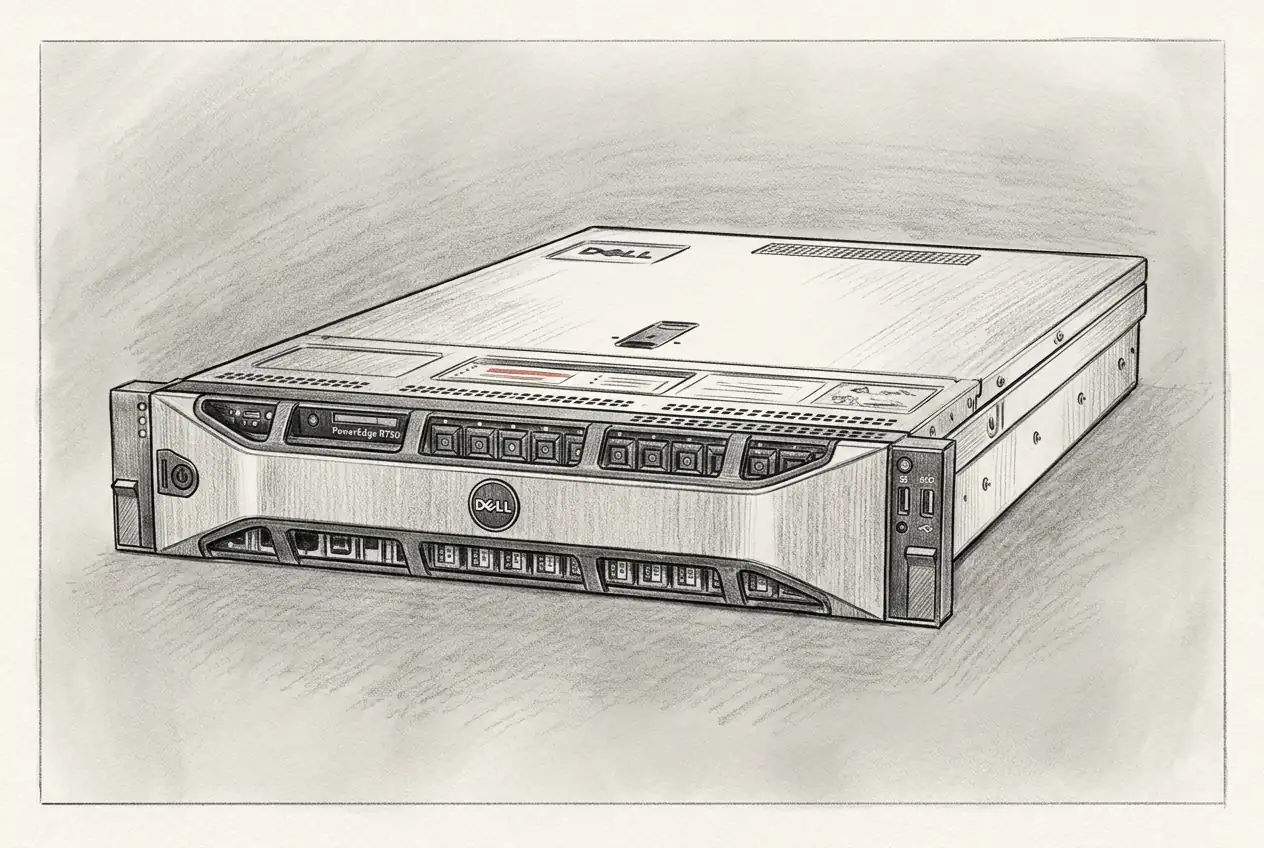
Shares of Dell Technologies slid 3.9% to $471.90 on August 17, extending a volatile stretch triggered by Morgan Stanley's August 7 decision to slash its price target from $477 to $430 while keeping a neutral rating. With no fresh catalyst today, the decline signals that Wall Street's concerns about Dell's ability to turn AI-server revenue into actual profit are hardening into a longer-lasting drag on the stock. Dell Sells More AI Servers Than Ever, So Why Is Wall Street Cutting Its Price Target?
Shares slipped 3.9% to $471.90 on August 17 as the aftershock from Morgan Stanley's August 7 price-target cut — from $477 to $430 — continued to sap investor confidence. With no new company announcement or earnings release to blame, the selloff underscores a stubborn question hanging over Dell: can the company turn its red-hot AI-server revenue into profits shareholders can bank on?
• The Revenue Is Surging, but the Margins Are Going the Wrong Way. Dell's Q1 fiscal 2027 revenue rose 88% to $43.8 billion, with AI-optimized server revenue hitting $16.1 billion. Yet Dell's gross margin — the share of each dollar kept after covering production costs — dropped 26% since the company began reporting AI server revenue, falling to 18.1%. In plain terms, Dell is selling far more but keeping less on every sale. The silicon value passes through to Nvidia, and what remains for Dell is the deployment layer — a thin slice of a massive pie.
• Two Banks, Two Reads — and the Bears Have the Louder Voice Right Now. Days after Morgan Stanley's cut, Goldman Sachs raised its target to $510, naming Dell a top U.S. hardware pick.
Morgan Stanley cited limited valuation upside and a squeezed risk-reward profile ahead of upcoming earnings. That $80 gap between the two targets captures Wall Street's split: bulls see a company riding a generational infrastructure build; bears see a high-volume assembler whose stock, at roughly 34 times earnings, already prices in the good news.
• Rising Memory Costs Could Squeeze Profits Further. Morgan Stanley has warned that hardware makers historically face gross-margin compression six to twelve months after memory costs start rising, and expects a median 60-basis-point decline in global OEM margins in 2026.
Rising costs for critical components — particularly high-bandwidth memory chips — are threatening to compress gross margins at precisely the moment investors need to see profitability improving.
• The Escape Route: Storage and Services Must Pick Up the Slack. Higher-value, Dell-designed storage rides alongside every AI deployment and lifts profitability faster than revenue.
Dell is guiding for $50 billion in AI-optimized server revenue for fiscal 2027 , but the stock's trajectory depends less on that top-line figure and more on whether Dell can attach enough of its own software and storage to each deal to widen margins. Until that shows up in earnings, Morgan Stanley's shadow will linger.