
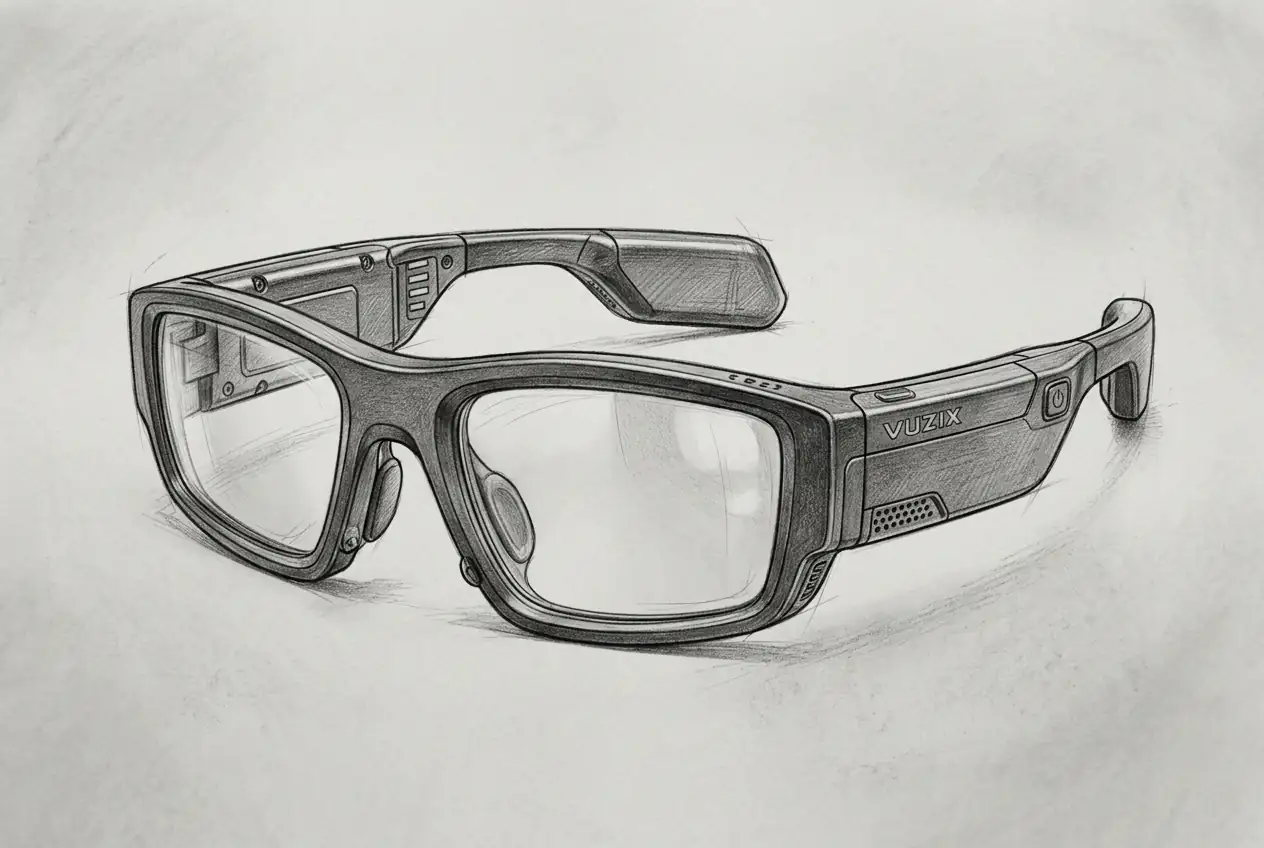
Shares of Vuzix plunged 10.2% to $2.37 after the augmented-reality smart glasses maker reported second-quarter results that missed already-low expectations and raised fresh questions about how long the company can sustain its current spending pace.
Revenue Keeps Shrinking in a Market That's Supposedly Growing. Total Q2 revenue fell 14% to $1.1 million from $1.3 million a year ago.
Product sales dropped 15% to $0.9 million, and engineering services slipped 8% to $0.2 million.
Analysts had expected $1.50 million — meaning Vuzix missed by roughly 27%. For a company pitching itself as a key supplier in the booming AI-wearables space, consecutive double-digit revenue declines (Q1 was down 12%) undermine the growth narrative that justifies a $220 million market cap on barely $4.5 million in annualized sales. That produces a price-to-sales ratio above 34x , a valuation reserved for hypergrowth businesses, not shrinking ones.
Cash Is Leaving Faster Than It's Coming In. Operating cash use widened to $6.6 million in Q2, up from $5.6 million in Q1 . Combined, Vuzix has burned roughly $12.2 million in operating cash through the first half of 2026. It entered the year's second quarter with $20.2 million in cash and no debt , but at the current burn rate, the company has fewer than three quarters of runway remaining. Vuzix's own SEC filing acknowledged it "will need to grow its business significantly to become profitable" or "raise new equity and/or debt capital," and these factors "raise doubt about the Company's ability to continue as a going concern."
The Dilution Treadmill Hasn't Stopped. In Q1 alone, Vuzix raised $5.8 million by selling stock through its at-the-market facility — meaning existing shareholders are being diluted to fund ongoing losses. With roughly 83 million shares outstanding , every new offering chips away at per-share value while revenue fails to scale.
The Strategy Bet Hasn't Paid Off Yet. Vuzix is pivoting from selling its own devices toward embedding its optics and display components inside larger customers' products — a higher-volume model that could eventually transform its economics. But whether OEM, defense, and waveguide opportunities "can ramp quickly enough to leverage new capacity" and reduce cash burn is the existential question. Until orders materialize, investors are paying a premium for a promise backed by a dwindling cash pile.