
Shares of SkyWest (SKYW) jumped 7.7% to $103.62 on July 24, reversing a week of declines, after the regional airline operator posted a mixed Q2 but held firm on its full-year profit outlook. The rally raises a pointed question: Is the market rewarding management's confidence, or ignoring a deteriorating cost picture?
The Numbers Missed, but Not by Enough to Panic
SkyWest reported Q2 net income of $101 million, or $2.54 per diluted share, down from $120 million, or $2.91 per share, a year ago.
That missed consensus estimates of $2.72 by $0.18.
Revenue rose 7% to $1.1 billion, while higher fuel costs in its independently operated routes weighed on results. Still, the miss came after analysts had already slashed expectations sharply — EPS consensus had fallen 19.6% over the prior 90 days from $3.17 — meaning much of the bad news was priced in before the report.
Management Doubles Down on Returning Cash to Shareholders
The real catalyst was forward-looking: management reaffirmed guidance for block hours (a measure of how much flying the airline does) up 5% and full-year GAAP EPS around $11.
SkyWest ended Q2 with $601 million in cash, having cut debt by roughly $1 billion since late 2022, and its board authorized an additional $250 million share repurchase program. At today's price, $11 in annual earnings implies the stock trades at roughly 9.4x forward earnings — cheap for a company actively shrinking its share count.
A New Jet Deal Signals Partner Confidence
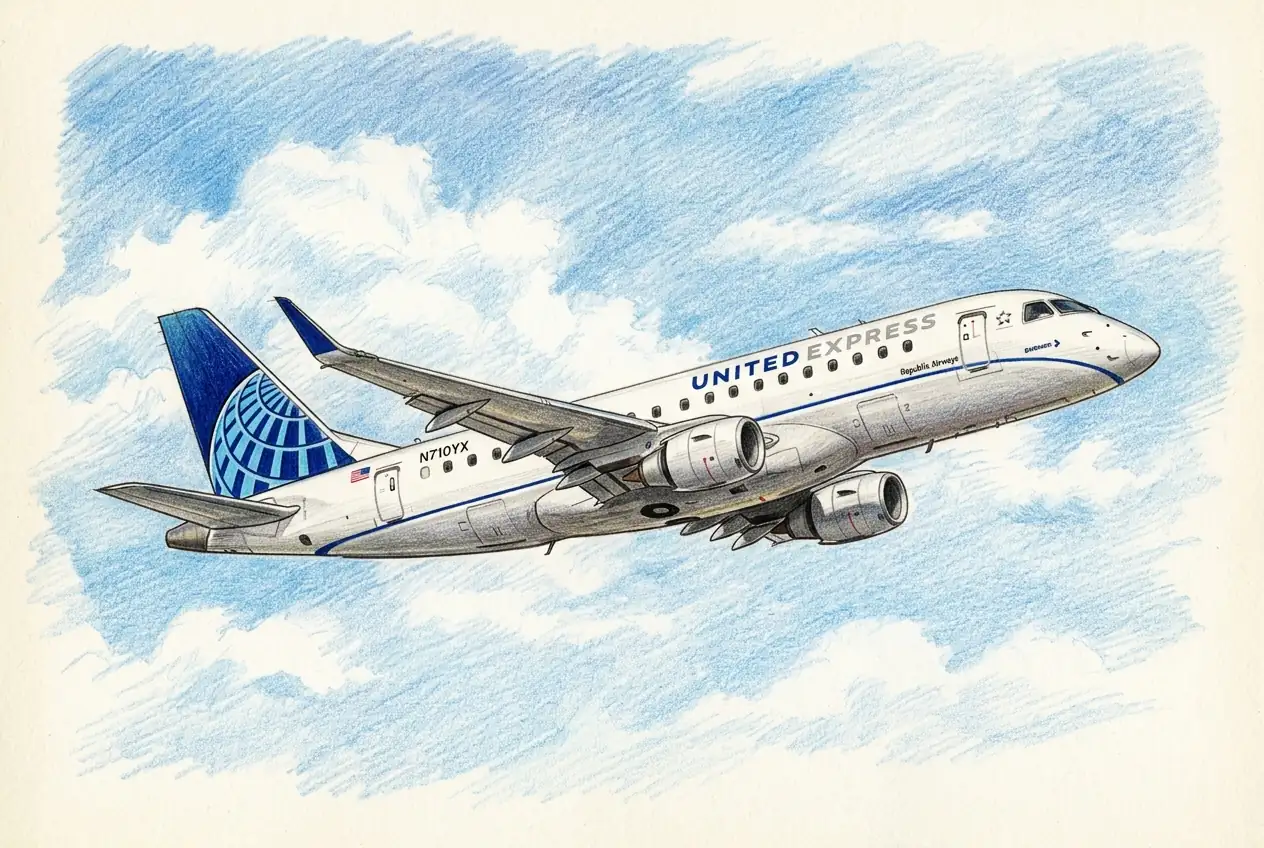
SkyWest announced a new agreement with American Airlines for 11 E175 aircraft, with deliveries beginning in 2026, supporting its goal of reaching 300 E175s by end of 2027. That deal matters because SkyWest's business model depends on long-term contracts with major carriers that guarantee revenue regardless of how many seats are filled. New plane orders from partners signal those relationships remain solid.
Fuel Costs Are the Unresolved Risk
Higher fuel cost per gallon in SkyWest's prorate business — routes it flies at its own financial risk — was the primary drag on Q2 results.
Management said fare increases have offset only about 60% of higher fuel costs in that segment.
Only 10% of total flying is exposed to fuel price swings , but that gap still cost roughly $0.37 per share against year-ago results. If oil stays elevated, the $11 EPS target becomes harder to defend in the second half.