
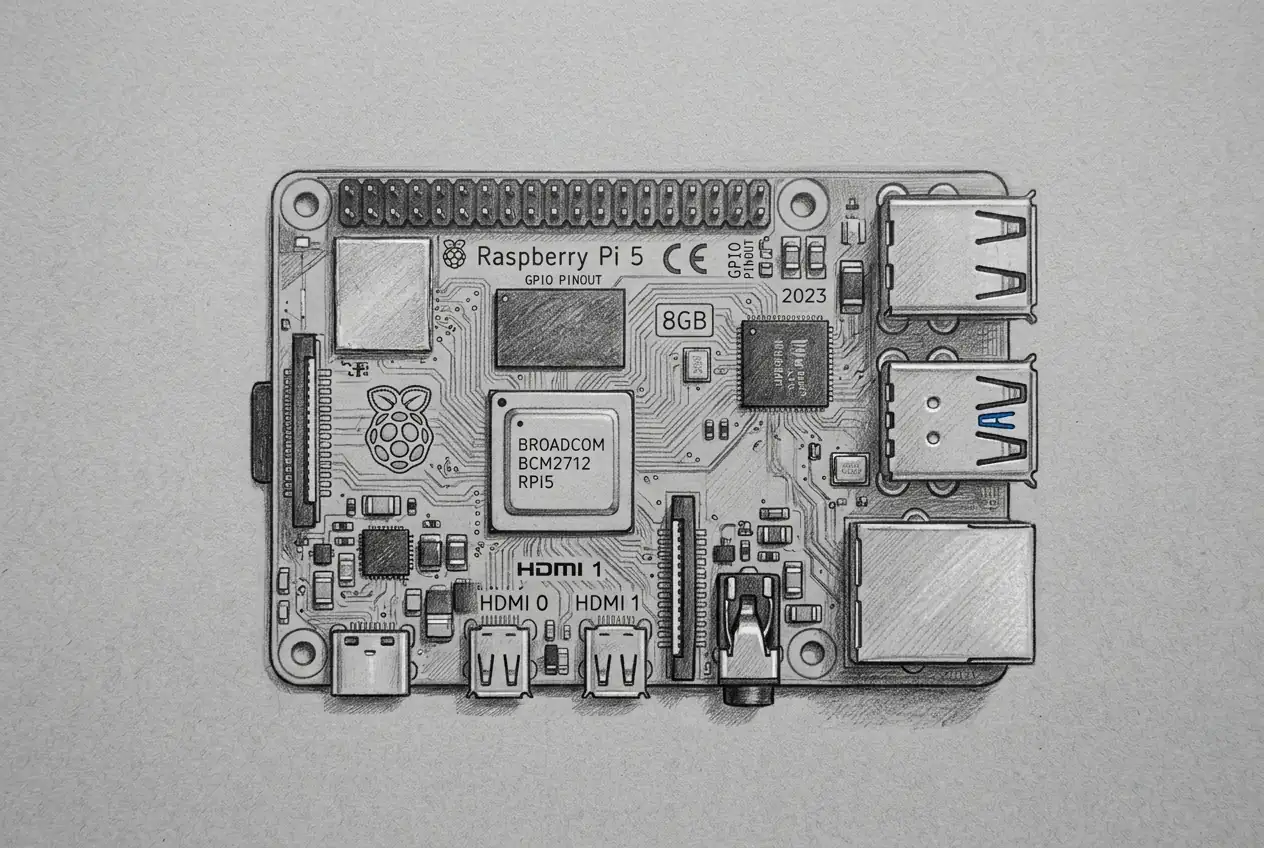
Shares of Raspberry Pi Holdings surged nearly 20% to £729.50 after the Cambridge-based computing company reported first-half results that crushed expectations on virtually every metric. Against a cautious broader market, the move signals investors believe this is more than a one-off beat.
Revenue Nearly Doubled, Answering the DRAM Worry
Revenue surged 90% to $256.9 million, while adjusted EBITDA — a measure of operating cash profit — more than doubled to $40.3 million. Heading into the print, Deutsche Bank and Berenberg both rated shares Hold, citing execution risk around memory-cost pressure.
Gross margin did narrow slightly as higher memory costs were passed through to customers , but the sheer volume growth swamped that drag. Management now expects full-year EBITDA to come in ahead of market consensus — a rare mid-year upgrade that explains the buying frenzy.
Industrial Customers Are Driving the Growth Engine
Unit shipments rose 17% to 4.2 million, with direct shipments (excluding licensees) up 26% to 3.4 million, reflecting accelerating adoption by industrial equipment makers.
Demand came from both OEM and reseller customers, with applications spanning smart home products and aerospace and defence. This matters because industrial buyers tend to lock in multi-year supply contracts, giving Raspberry Pi more predictable revenue than its hobbyist roots suggest.
Profit Per Board Jumped, Signaling Pricing Power
Gross profit climbed 79% to $59.4 million, with gross profit per board up 53% to $12.20.
Profit before tax leapt 216% to $19.6 million, while adjusted earnings per share rose 192% to 13.90 cents. For context, a year earlier, pre-tax profits were just $6.2 million on a 6% revenue decline — making the swing dramatic.
The Second Half Still Has Questions
Management expects higher unit volumes in H2, supported by a substantial order backlog, but cautioned that the exceptional unit economics seen in the first half have since moderated.
The company says it has sufficient memory inventory to meet 2026 production targets and a strong pipeline of OEM opportunities positions it for rapid shipment growth into 2027 and beyond. A CFO transition adds a wrinkle: outgoing CFO Richard Boult will step down on October 31, 2026 , with Tim Powell appointed as his successor effective October 16.
At £729.50, the stock trades well above analyst targets that recently ranged from 650p to 670p. The beat is undeniable — but sustaining this pace requires the industrial pivot to keep delivering while memory costs stay manageable.