
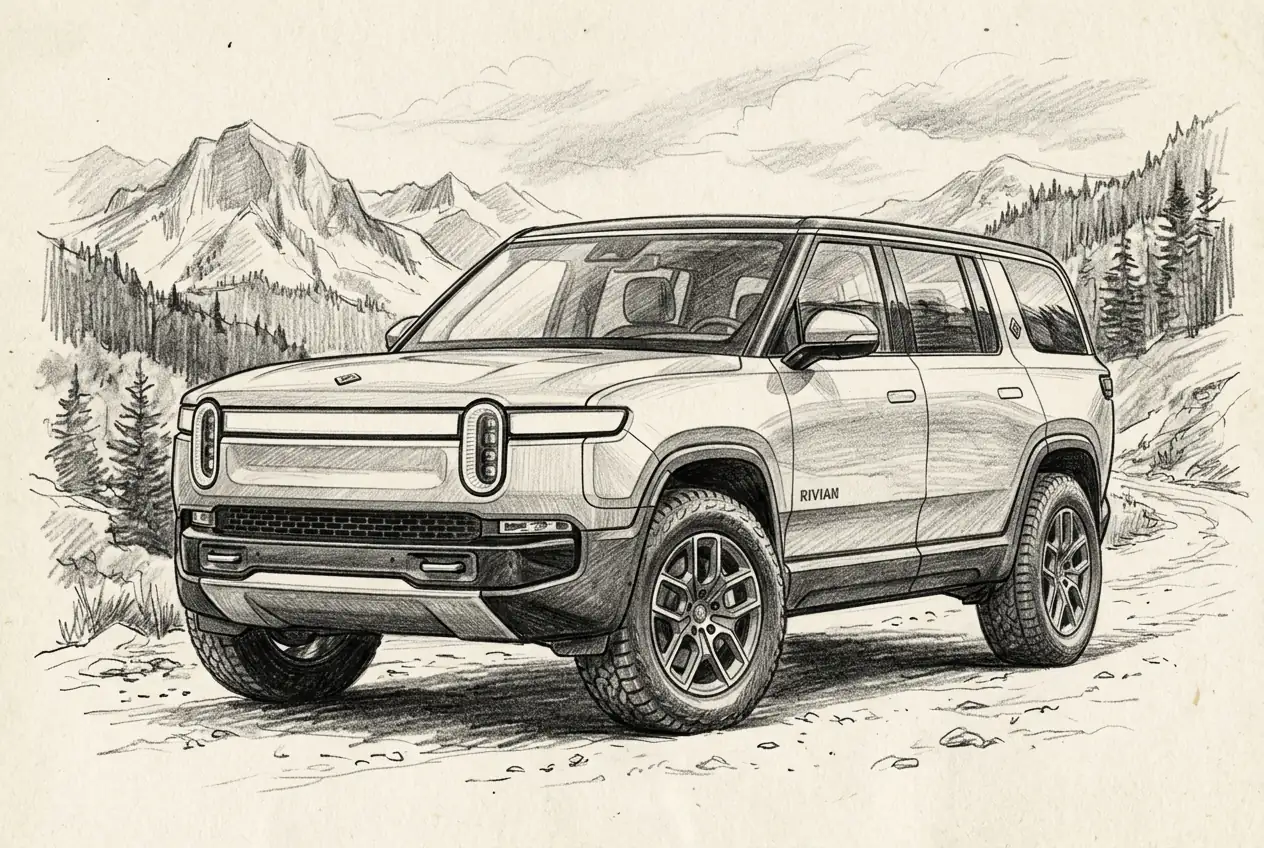
Shares of Rivian surged 6.8% to $12.21 after the EV maker posted third-quarter results that cleared Wall Street's bar on revenue, losses, and deliveries — then sweetened the outlook for the rest of the year. The question for investors: does a narrowing loss at high speed mean the finish line is actually getting closer, or just that the runway is getting shorter?
Record Deliveries Show the Cheaper SUV Is Already Carrying the Company. Revenue rose 38% year-over-year to $2.155 billion, and Rivian's more affordable mid-size SUV, in its first full quarter of customer deliveries, became the company's best-selling vehicle.
Rivian produced 19,751 vehicles and delivered 19,248, a 45% jump over the same quarter last year. Volume matters here because fixed factory costs get spread across more units — the core math any automaker needs to eventually stop losing money.
Cost Per Vehicle Fell Sharply, but the Car Business Still Loses Money. Automotive cost of goods sold per unit fell by more than $12,000 quarter-over-quarter thanks to the higher mix of the mid-size SUV and better fixed-cost leverage. Yet the automotive segment still posted an $80 million gross loss, which includes about $120 million in extra costs from ramping up the new model. Strip out those ramp costs and cars are roughly breakeven — encouraging, but not proven. The only reason Rivian posted a consolidated gross profit is its software and services segment, which brought in $605 million in revenue at a 42% margin — a line buoyed by its Volkswagen joint venture.
Raised Guidance Signals Confidence, but Cash Is Still Draining Fast. Rivian lifted its delivery outlook to 67,000–70,000 vehicles and improved its adjusted EBITDA loss guidance by $100 million at the midpoint.
Still, adjusted EBITDA (operating profit before depreciation and certain charges) remained negative $435 million, and free cash flow was negative $1.124 billion for the quarter.
The company burned through $3.49 billion of cash over the last year. With $5.31 billion on its balance sheet, analysts estimate roughly 18 months of runway — assuming no new capital raises.
The Bottom Line for Shareholders. Rivian still expects both the mid-size SUV and the overall automotive segment to reach positive gross profit by the end of 2026. If it hits that milestone, the stock's beaten-down price — roughly 88% below its IPO open — starts to reflect deep pessimism that may be overdone. If it misses, dilution from new fundraising looms. The next quarter's margins will tell the story.