
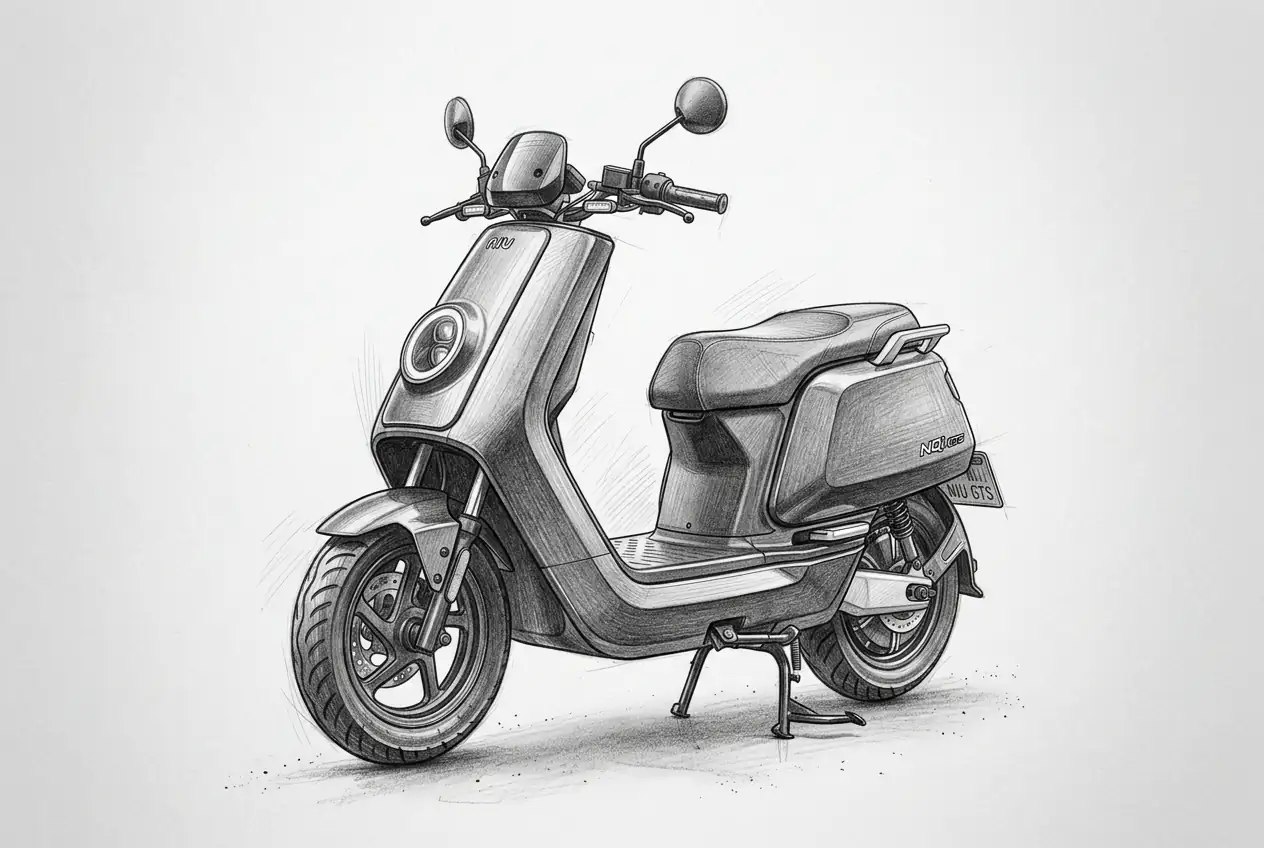
Shares shifted sharply lower as Niu Technologies dropped 8% to $2.26 in early Monday trading after reporting second-quarter 2026 results that showed a familiar, troubling pattern: surging scooter sales paired with deepening losses. For a company that has now swung from a small profit a year ago to consecutive quarterly red ink, the market's patience is visibly thinning.
Selling More Scooters for Less Profit Is the Core Problem. Q2 revenue rose 14.7% year over year to RMB 1.44 billion, but that figure landed well below the company's own guidance of RMB 1.57–1.82 billion, which implied 25–45% growth. NIU had guided Q2 revenues to that range , and missing the low end signals either weaker pricing or softer-than-expected demand despite unit volume of 434,687 scooters — up 24.2%. The swing to a loss, after Q2 2025 delivered net income of RMB 5.9 million , tells investors that higher volumes are being bought with aggressive spending rather than efficient scaling.
A Spending Spree That Started in Q1 Has Not Let Up. The concern is cost growth: in Q1, operating expenses rose 59.7% to RMB 263.6 million, pushing net loss to RMB 93.9 million . Selling and marketing spending alone hit roughly RMB 180 million in Q1 — a fourfold year-over-year increase . Management promised those costs would normalize in Q2, yet the company still posted a loss, suggesting the marketing binge is structural rather than seasonal.
Big Investors Are Already Heading for the Exit. Only 14 institutional investors added NIU shares in the most recent quarter, while 44 reduced their positions . Acadian Asset Management cut nearly 47% of its stake, and Renaissance Technologies shed 41% . The consensus analyst rating sits at "Reduce" with a $3.50 price target — still above today's price but hardly a ringing endorsement.
The Valuation Looks Cheap, but Cheap Doesn't Mean Safe. At $2.26, NIU's market capitalization hovers around $170 million for a company generating over $600 million in annualized revenue. But with a negative net margin of 2.17% and a negative return on equity of 10.85% , the discount reflects real doubts about whether scooter volume growth will ever translate into shareholder returns. Until NIU proves it can sell more and spend less doing it, the stock remains a volume story without a profit chapter.