
Shares of Lockheed Martin jumped 6.8% to $588.99 on a down day for broader markets after the defense giant delivered a third-quarter earnings beat and raised its full-year outlook for the second straight quarter. The results paint a company riding an unprecedented wave of global weapons demand — but buried in the fine print is a cost problem on its flagship fighter jet that investors shouldn't ignore.
Missiles and Jets Drove a Double Beat on Sales and Profit
Lockheed posted earnings of $7.97 per share, beating estimates by $0.45, on revenue of $20.7 billion — an 11.3% jump and $240 million above forecasts.
Growth was led by a 24% surge in the missiles division, driven by higher production of PAC-3 and THAAD missile-defense systems.
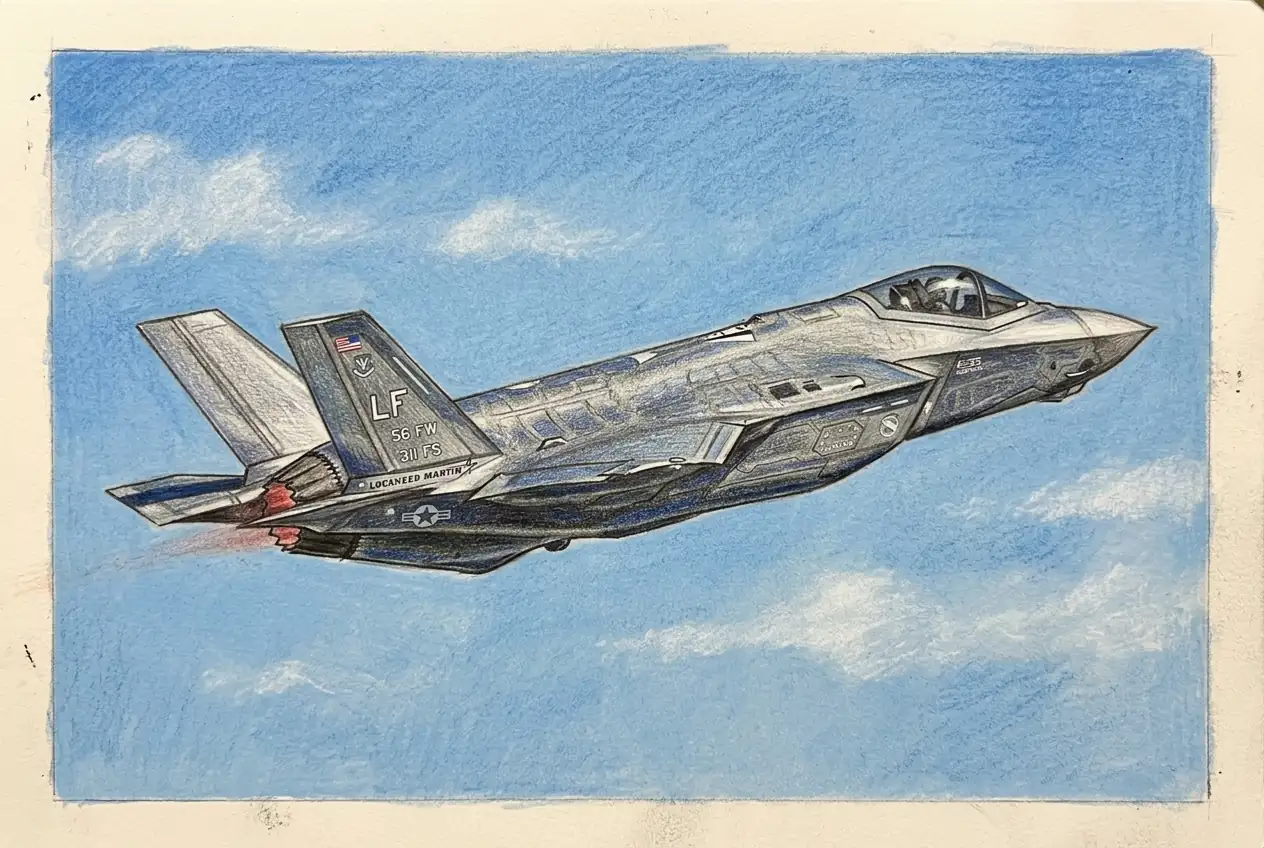
The jet-building arm rose 13%, supported by increased F-35 production. That kind of broad-based momentum across all four divisions is what convinces Wall Street a beat isn't a one-off.
A $292 Billion Backlog Underwrites Years of Revenue
Backlog reached a record $292 billion, up 27% from the prior quarter, including $52.5 billion tied to a multiyear PAC-3 interceptor award.
The company reported a book-to-bill ratio of 4, meaning new orders were four times quarterly sales. For shareholders, backlog is essentially a forward-looking revenue guarantee — and at roughly 3.6 years of sales, it provides rare visibility into future cash flows.
Management Raised the Bar Again — Including Cash Flow
Lockheed now expects $80–$82 billion in 2026 sales (up from $79.75–$81.75 billion), EPS of $30.35–$30.75 (from $29.95–$30.65), and free cash flow of $7.8–$8.0 billion (from $7.0–$7.2 billion). The cash flow bump is the most significant upgrade — an extra $800 million at the midpoint funds buybacks, debt reduction, or the 24th consecutive annual dividend increase the company just announced.
The F-35 Cost Cloud Hasn't Cleared
Costs on F-35 Lot 20 production have begun exceeding contractual authorization, and management warned that without additional government funding, overruns will weigh on future results.
A new 10-year framework covering 850 U.S. F-35 aircraft at 156 jets per year was announced alongside earnings — but it is not yet a finalized contract. Until that deal is locked in, investors are left pricing in upside from missiles while discounting risk on the company's single largest program.