
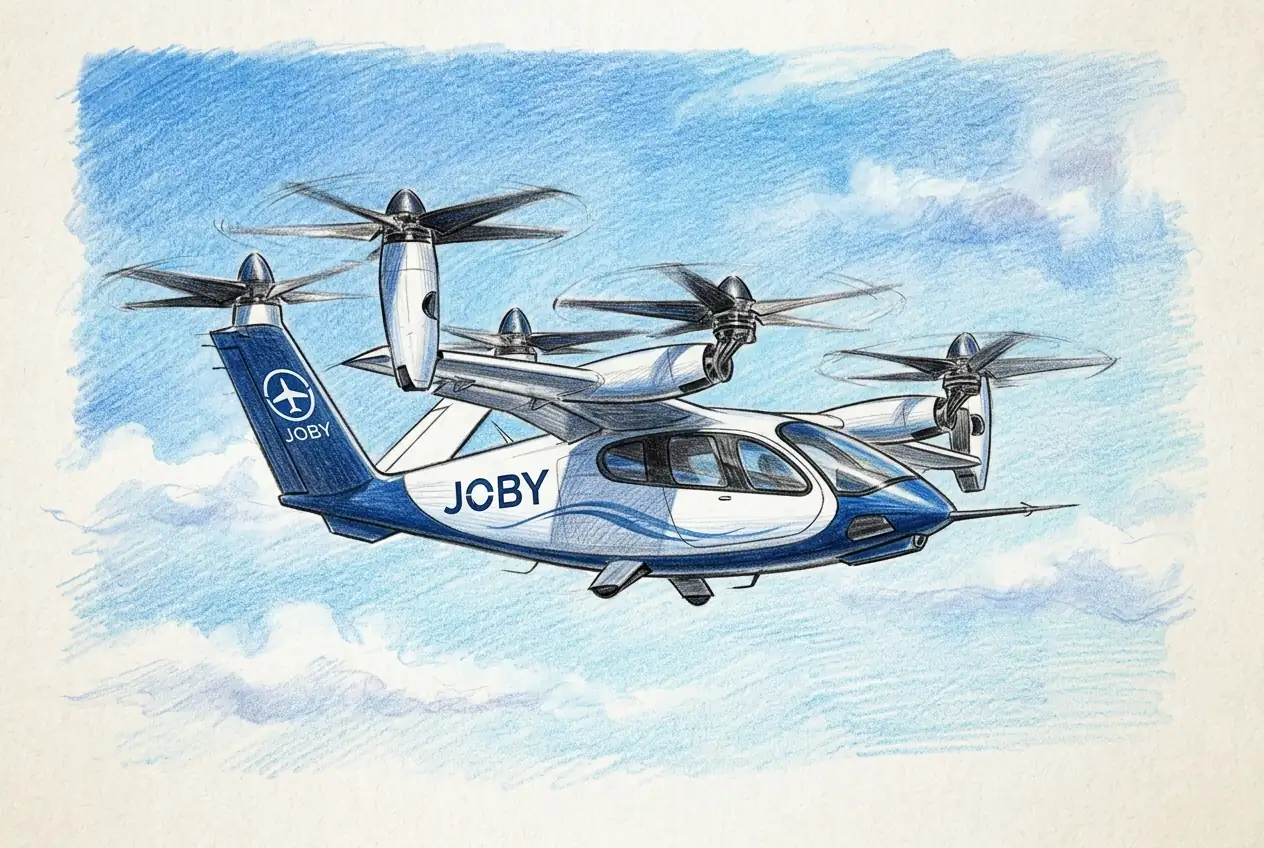
Shares shifted as Joby Aviation jumped 6.9% in after-hours trading to $5.40 following a third-quarter earnings release that blew past Wall Street's numbers. Q3 revenue hit $55 million, primarily from Blade, with the helicopter-charter unit flying a record 44,000-plus passengers.
Analysts had expected roughly $39 million — meaning Joby delivered a 41% beat. Management also raised its full-year outlook. The question is whether strong helicopter bookings can paper over the fact that Joby's core product, an electric air taxi, still isn't certified to carry a single paying customer.
A Seasonal Surge Drives Most of the Upside
Q3 is typically Blade's strongest revenue quarter , and the numbers prove it: revenue climbed from $38.6 million in Q2 to $55 million, a 42% sequential jump. Management raised full-year 2026 revenue guidance 15% to $135 million–$140 million , up from the prior $115 million–$125 million range. Critically, almost all of this revenue comes from Blade — a legacy helicopter business Joby acquired — not from its electric aircraft.
Cash Burn Still Towers Over Revenue
Joby ended Q2 with $2.3 billion in cash and short-term investments , but it is burning over $200 million per quarter.
Management guided for $385 million–$415 million in second-half cash use. Even at the new $140 million revenue ceiling, that's roughly a dollar burned for every 17 cents earned. The pending $500 million Resonant Sciences acquisition — mostly cash — will further compress the runway.
FAA Certification Remains the Real Unlock
Joby is in the fifth and final stage of FAA type certification, but no certificate has been issued.
As of mid-2026, Joby reported Stage 5 at just 20% complete on its side and 10% accepted by the FAA. Until that certificate arrives, every dollar of air-taxi revenue is theoretical. The stock, still down more than 50% over the past twelve months, is priced on faith in that timeline.
Defense Diversification Is a Hedge, Not a Fix
Resonant Sciences reported over $100 million in trailing-twelve-month revenue with 40% year-over-year growth and is already profitable at the operating level. That cushions the story if FAA approval slips, but the deal isn't expected to close until first-half 2027 .
Bottom line: The beat is real and the guidance raise is material, but nearly all of it reflects a seasonal helicopter business — not the electric-aircraft future investors are paying for.