
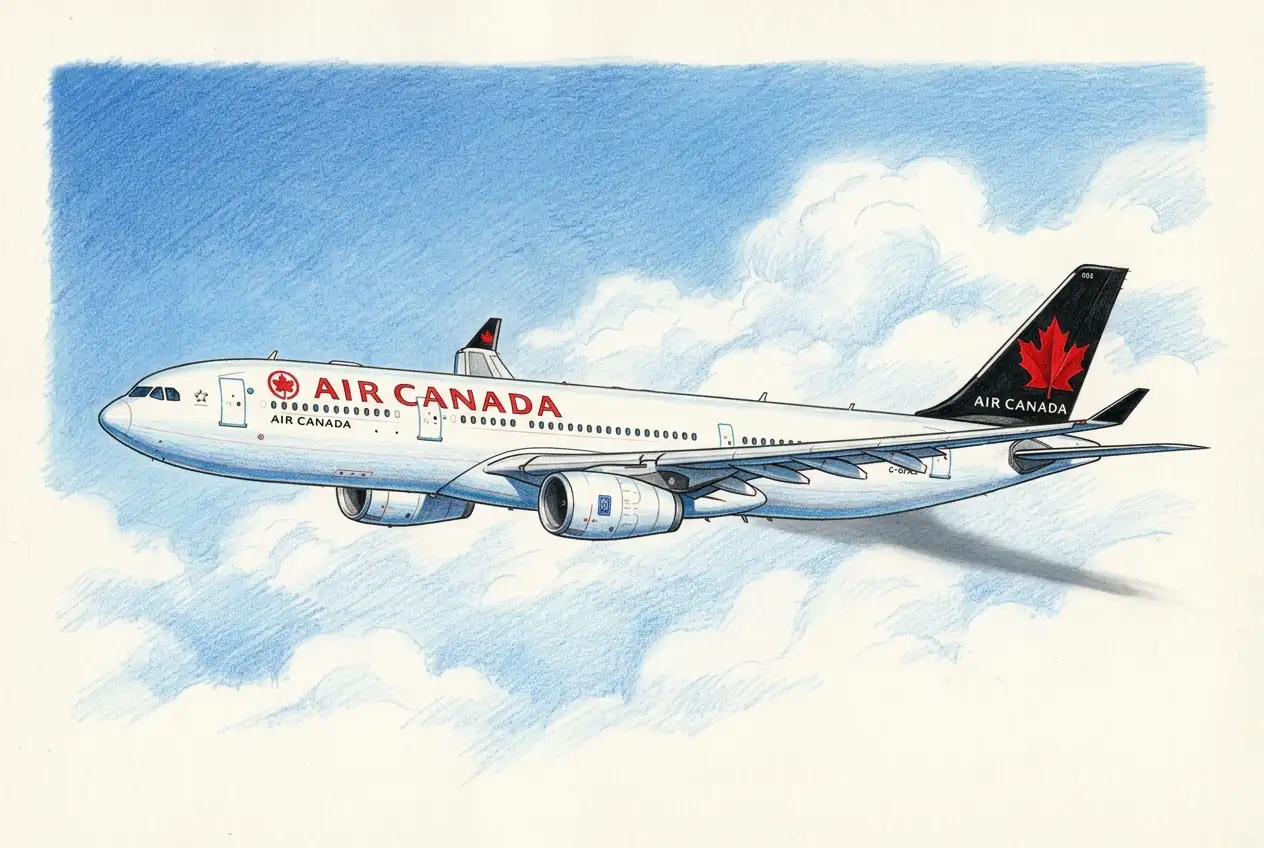
Air Canada's Best Quarter on Record Still Wasn't Enough — Can the Airline Outrun a $906-Million Fuel Bill?
Shares of Air Canada plunged 7.9% to CA$20.14 after the carrier slashed its full-year profit forecast even as it posted the strongest revenue quarter in its history. For investors, the message is unsettling: demand is booming, but the airline's earnings are shrinking anyway.
• A $906-Million Fuel Hit Wiped Out the Revenue Gains
Fuel expense surged by CA$906 million as prices rose 68% year over year, crushing the adjusted EBITDA margin from 16.6% to 13.4%.
The airline recovered only 46% of its incremental fuel cost in Q3, well below its original 60% target, though management expects recovery to reach 70% in Q4. That gap means hundreds of millions of dollars in added cost that Air Canada simply could not pass along to passengers fast enough.
• Record Revenue of $7 Billion Couldn't Protect the Bottom Line
Operating revenue rose 21% to CA$7 billion, passenger revenue hit a record CA$6.3 billion, and the airline flew nearly 6% more capacity at an 89% load factor with 11% higher yields.
Adjusted EPS of CA$0.75 topped the CA$0.55 consensus by roughly 36%. Yet none of that prevented management from cutting its 2026 adjusted EBITDA outlook to CA$2.4–$2.7 billion — about $500 million below prior guidance — and warning that full-year free cash flow will now be roughly breakeven. A carrier generating $7 billion a quarter yet barely producing free cash tells shareholders that fuel costs can vaporize even exceptional commercial performance.
• A Key Growth Lever Faces Regulatory Trouble
Canada's Competition Bureau warned that the proposed expansion of Air Canada's joint venture with United Airlines "would likely harm competition on 10 routes" and could create "monopoly or near-monopoly conditions," resulting in "millions of dollars in consumer harm each year."
Air Canada argues the expanded partnership would benefit Canadian travellers , but if the transport minister approves the changes, the airlines plan to ask the tribunal to cancel the original 2012 consent agreement restricting coordination — a move the Bureau is clearly prepared to fight. Losing this bid would limit Air Canada's ability to squeeze higher revenue from premium cross-border routes.
• The Disconnect Between Demand and Valuation
Air Canada used Aeroplan transaction proceeds to repay $1.7 billion of debt and complete an $800 million share buyback, reducing outstanding shares by roughly 10%. Aggressive capital return signals management's confidence, but the market is pricing in a simple reality: until fuel costs stabilize, even record passenger demand cannot reliably translate into shareholder returns.